The IIE Bachelor of Public Health Degree a scarce and unique tertiary programme in SA

The COVID-19 pandemic has resulted in unprecedented challenges to health and health systems worldwide. The pandemic has, however, highlighted the growing demand for and importance of qualified public health professionals and public health graduates. Public health as a discipline has proven critical to limiting and reducing the transmission of COVID-19 and deaths. In addition, the continuous emergence of new public health and health system challenges increases the demand for more qualified public health professionals, especially at an undergraduate level.


“In most countries, including African countries, government directions for public health programmes are geared towards preventative healthcare in a community setting rather than hospitals in order to deal with the rising health costs caused by the increase in chronic health conditions, co-morbidities and other preventable lifestyle diseases. Government and non-government organisations are therefore in constant need of public health professionals and graduates who are qualified to deal with disease prevention, including health promotion, rather than focussing on a curative and more expensive health model.  A public health system oriented toward prevention and proactive measures will be best equipped to encounter a pandemic and respond to other ongoing health challenges”. says Dr Witthuhn, Programme Manager for Health at IIE MSA. 


The IIE Bachelor of Public Health qualification differs from a medical or healthcare degree by focusing to a large extent on the detection, surveillance and prevention of disease. The objective of the field or discipline is to reach populations and communities and to detect and prevent health problems before they start, rather than waiting to work with people once they are already sick. The public health approach is therefore based on a preventative health model rather than a curative health model.


The IIE Bachelor of Public Health undergraduate degree combines different academic areas to allow for a multidisciplinary approach to the health care field. The offering covers the population, community, health and wellness aspects in modules such as Foundations of Public Health, Health and Social Care systems, Health Promotion, Global and Local Health Challenges, Culture Society and Health, Health Programme Planning, Health Programme Evaluation, Health Policy and Politics, and Research Methods in the Health Sciences. The undergraduate qualification also covers the more scientific basis of healthcare in a few of the modules such as Biological Bases of Health and Disease I and II, Analysing Patterns of Health and Disease, Treatment and Technologies, and Disease Prevention and Control.  


The public health field is a unique area of study providing many professional job opportunities and IIE MSA is one of the few campuses in South Africa to offer it as a field of study as a separate offering to medicine. Employment opportunities include sectors such as government, the private sector, NGOs, Research institutions as well as international healthcare organisations such as the World Health Organisation. It consequently offers almost limitless employment opportunities as well as opportunities for professional specialisation.


Health is important to people and consequently public health is essential to our individual and community well-being, explains IIE MSA Head of School Neil Manson. “A career in public health is highly rewarding as it implies being party to improving people’s lives every day. And the course provides students with a perspective which broadens public health thinking beyond just the individual and why they might make certain health choices, to the wider environment. Students are armed to consider policy related solutions that can be put in place to help people make healthier decisions. Public health problems are so complex and involve people in medicine, nursing, sociology, communications, environmental health, making it a great way to solve problems.”


Manson notes that job market growth in the health, local government, and workplace and education sectors continues unabated. Programme Manager, Dr Jackie Witthuhn, agrees the need for public health workers in every sector is likely to grow in the foreseeable future. “With most of our IIE graduates finding job prospects directly after study, the unemployment rate for public health professionals remains minimal. The practical placement module in the third year of study allows for students to work at various institutions and organisations including government settings such as clinics and hospitals. We further see a growing awareness of this more preventative approach to public health and fully expect graduates of our programmes to be in higher demand. There is a strong demand for multi-skilled public health programme managers, public health policy advocates and for prevention and health promotion workers. 


Public Health careers in the public, private, or non-profit sectors include for example:

·        Public health programme management

·        Development, planning, implementation and evaluation of public health programmes

·        Community health work

·        Identifying determinants of public health problems by using data and evidence 

·        Disease prevention and control

·        Biostatistics (at entry level)

·        Health promotion and health education

·        Epidemiology (at entry level)

·        Public Health Research Officer


IIE MSA also offers an IIE Honours (with a specific focus on Research, Epidemiology, Biostatistics and Behavioural Medicine) as well as a IIE Postgraduate Diploma in Public Health qualifications (focussing on Health Policy, Management, Leadership and Governance, Epidemiology, HIV and Co-Morbidities, Health Systems Research, Managing Health Systems, Population Health, Planning and Evaluation of Public Health Programmes) as a progression from the Bachelor programme.


This IIE Bachelor of Public Health degree is accredited by the CHE. Registration: NQF Level 7, SAQA ID 91996.


Applications for the IIE Bachelor of Public Health are open and classes start on 28 February 2022. Find more about the public health qualifications on our site by visiting www.iiemsa.co.za to request a consultation with one of our student advisors. Alternatively email us at enquiries@iiemsa.co.za or call us on +27 11 950 4009. The body content of your post goes here. To edit this text, click on it and delete this default text and start typing your own or paste your own from a different source.

ADvTECH Updates

January 27, 2026
Practical early childhood development advice for schools and parents
By Tamara Thomas January 21, 2026
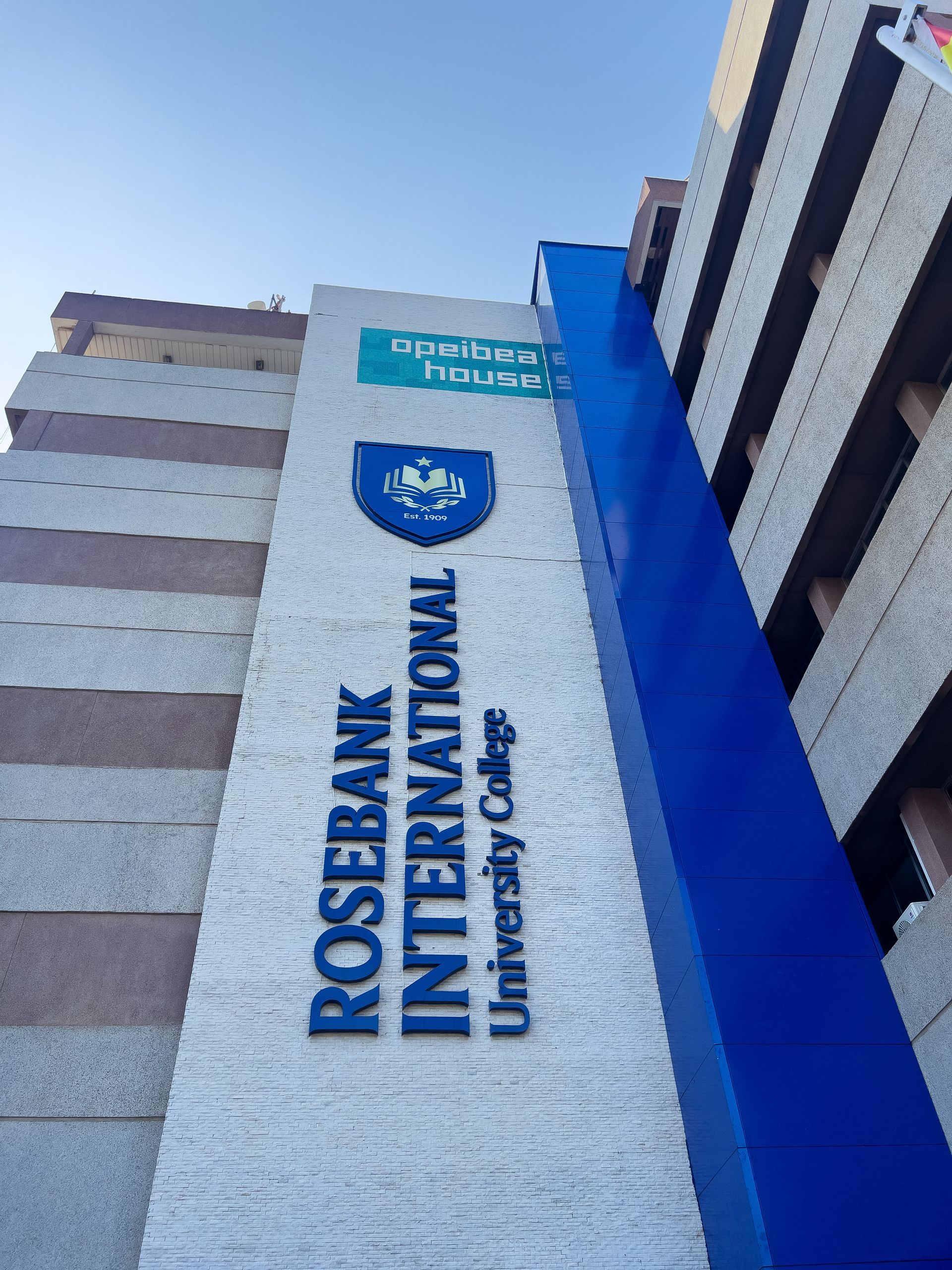
Rosebank International University College (RIUC), the groundbreaking institution launched last year by Africa’s leading private education provider, the ADvTECH Group, today proudly welcomed its inaugural cohort of students. Hundreds of exceptional first-time students, carefully selected from an overwhelming pool of more than one thousand highly competitive applications, have now officially commenced their transformative academic journey at RIUC . This select cohort now embarks on an unparalleled opportunity – one that will equip them with the advanced skills, cutting-edge knowledge, and innovative mindset essential to meet the evolving demands of the global workforce in the Fourth Industrial Revolution and beyond. Dr Linda Meyer, President of Rosebank International University College, and MD at The IIE’s Rosebank College and Waterfall School of Business (WSB), said: “Today marks an historic step as we welcome our pioneering inaugural cohort.” “Backed by ADvTECH’s pan-African vision, our accreditations, global partnerships, and GETFund support, RIUC is delivering inclusive, innovative education that prepares students for success in the Fourth Industrial Revolution and beyond, while rooting excellence in African leadership.” “As they step onto the modern campus in Accra for the start of the 2026 academic year, these pioneering students are not only beginning their higher education, but also contributing to a significant milestone in Ghana’s tertiary landscape.” “They are positioned to become future leaders, innovators, and global professionals who will drive meaningful progress both locally and internationally,” she added. RIUC offers accredited programmes across its faculties, including high-demand qualifications such as: Bachelor of Computer and Information Sciences Bachelor of Commerce in Supply Chain Management Bachelor of Hospitality Management Bachelor of Computer and Information Sciences in Application Development Bachelor of Information Technology in Business Systems Bachelor of Commerce in Digital Retail Entrepreneurship RIUC is truly positioned as a hub for global learning, boasting partnerships with: Ghana Tertiary Education Commission (GTEC) Capsicum Culinary Studio (endorsing culinary programs with global industry ties) Association of African Universities Golden Key International Honour Society (global network for high-achieving scholars) ADvTECH and Rosebank College South Africa “Our new students can look forward to international exchange programmes, immersive study abroad opportunities, and access to globally recognized qualifications,” Dr Meyer says.  With limited remaining space, prospective students for 2026 and beyond are encouraged to register immediately—online at www.riuc.edu.gh/application—registration or by visiting the campus.
January 21, 2026
Pinnacle College Kyalami is a school intentionally designed for their community, one in which adaptability, digital fluency and human skills matter as much as academic knowledge. Its educational model blends strong academic foundations with innovation, personalisation and holistic development to prepare learners for futures that are still unfolding. A defining feature of the school is the purposeful integration of technology into everyday learning . Classrooms are equipped with modern digital tools that support interactive, blended and inquiry-based learning. From Grade 0, students are introduced to coding, robotics and computational thinking , helping them develop problem-solving skills, logical reasoning and creative confidence with technology, not as an add-on, but as part of the learning culture. In Grades 4 to 6, mathematics is supported by ADvLEARN , an AI-enhanced approach to learning that enables teachers to track learner progress with greater precision and tailor targeted support or extension to individual needs. This is further strengthened by the school’s Individual Education Plan (IEP) framework, ensuring that each learner’s academic, emotional and developmental needs are understood and supported in a structured, intentional way. Pinnacle College Kyalami also offers a boarding environment for up to 100 learners , providing a secure, nurturing and structured setting that extends learning beyond the classroom. Boarding supports independence, leadership and social development, while offering families a balanced blend of care, routine and opportunity. The campus itself is designed as a “playground for the future” , a space where curiosity is encouraged, collaboration is natural and learning is active. Through project-based work, interdisciplinary thinking and experiential opportunities, learners are supported to engage deeply, think critically and apply knowledge meaningfully.  Together, these elements create a learning environment that is not only academically sound, but future-focused by design, developing learners who are confident, capable, adaptable and ready to thrive in a world of constant change. Pinnacle Colleges, a member of the ADvTECH Schools Division, is a leading provider of future-focused education from early learning through to high school. Guided by our promise of Focus for Success, we combine academic excellence with innovation to provide structured pathways and modern learning environments. Our mission is to be the leading school brand for students pursuing tertiary education. By integrating data-informed teaching and technology-enhanced learning, we partner with parents to nurture confident, values-driven young people. With a legacy of excellence and a commitment to personal growth, Pinnacle Colleges prepares students to thrive in a rapidly changing world.
By Tamara Thomas January 20, 2026
Choosing a public university or private higher education institution is one of the most important decisions prospective students will ever make, and also one of the hardest. While hundreds of thousands of students have already been accepted into further study for 2026, many others still have to make the call before the official start of the academic year. For these students, and senior high students who will have to consider their next steps in coming months and years, it is important to look beyond the brochure, an education expert says. “For some, choosing a higher education institution is about a taking the first independent step. For others, it’s about returning to study after years in the workplace, fitting lectures around meetings, assignments around family life, and ambition around reality,” says Nadia Landman, Head of Academic Quality Management Systems at ADvTECH’s Independent Institute of Education. Landman notes that while open days help, and polished brochures showcasing impressive campuses reassure, prospective students should attempt to gain a good understanding of what everyday life will actually look like once the semester starts. WHEN REALITY HITS AND STUDENT SUPPORT BECOMES CRUCIAL The real test of an institution rarely happens in week one. It happens a few weeks in, when deadlines stack up, confidence dips, work pressures increase, and life doesn’t politely pause for assignments. “Every institution talks about student support,” says Landman, “but what matters is whether that support is visible and accessible when students begin to struggle, not only when they’ve already failed.” For parents, that may mean asking how an institution identifies first-year students who are falling behind and what support is then made available. For adult learners, it means asking different but equally practical questions: Who do I contact when work deadlines clash with assessments? How accessible are lecturers outside of office hours? Are sessions recorded and made available should I miss a lecture? Institutions that understand student reality, across ages and stages, can explain clearly how they support learners before pressure becomes a crisis. WHO IS ACTUALLY DOING THE TEACHING? Behind every qualification is a lecturer, or a team of lecturers, responsible for turning content into learning. Qualifications and experience matter. But so does engagement, responsiveness, and an understanding of who is sitting on the other side of the desk or screen. “Adult learners bring professional experience, practical questions, and limited time. Parents want reassurance that lecturers are not only knowledgeable, but attentive and accountable. Strong institutions support their lecturers to teach well, and they take student feedback seriously,” says Landman. WORKING WITH REAL-WORLD REALITIES Few people still believe that a qualification alone guarantees a career. Parents worry about employability and adult students worry about relevance. Both are asking the same underlying question: Will this programme help me adapt to a changing world? “Curricula should not be static documents. They should evolve with industry, technology, and society. Institutions committed to quality review their programmes regularly, involve industry voices, provide work integrated learning opportunities, and assess students in ways that reflect real-world complexity, not just academic theory,” says Landman. “The aim is capability, not just completion.” WHY QUALITY AND GOVERNANCE MATTER Accreditation, assessment moderation, and academic integrity may sound bureaucratic, but they quietly protect the value of the qualification, and the effort invested in earning it. “Quality systems aren’t about red tape,” says Landman. “They exist to ensure fairness, credibility, and consistency, whether you’re studying full-time straight out of school or part-time while working.” Institutions that take quality seriously are open about how these systems work and why they matter. One of the clearest signals is the quality of service of an institution. How quickly are emails answered? Are queries met with empathy or deflection? Is communication clear, honest, and respectful of people’s time? Over time, these everyday interactions reveal whether an institution is designed around systems, or around students with real lives. “Higher education is not a transaction. It’s a commitment – of time, energy, and belief in a better future. Parents may not walk the journey for their children. Adult learners may not have the luxury of starting over if things go wrong. In both cases, the choice of institution matters deeply,” Landman says. “When looking at your options, understand that the strongest institutions are not defined by the loudest claims. They are defined by their willingness to answer difficult questions openly, thoughtfully, and without hesitation. And it is in asking those questions, early, calmly, and with intention, that both parents and adult learners move beyond the brochure and towards a decision that truly supports success.” Note: Recent developments in national higher education policy are helping to bring greater clarity for prospective South African students. The Department of Higher Education and Training’s policy on the recognition of institutional types is designed to ensure that different kinds of higher education institutions are clearly defined, appropriately regulated, and transparent about what they are established to offer. For students and families navigating an increasingly complex higher education landscape, this clarity will support more informed decision-making, helping them choose institutions that are aligned with their academic goals, life circumstances, and preferred mode of study, rather than relying on assumptions or labels. Policy implementation can only proceed once regulations are published.
By Tamara Thomas January 14, 2026
JSE-listed ADvTECH is celebrating another year of outstanding academic performance following the release of the 2025 IEB Matric results. Three of the group’s schools – Crawford Sandton, Crawford La Lucia, and Glenwood House were ranked in the top ten co-educational schools. Across its 103 South African schools, ADvTECH’s pass and bachelor’s pass rates for 2025 were 99,7% and 94,0% respectively, with an impressive 3 371 distinctions at an average of 2,1 per student. 16 students from the ADvTECH group were recognised for Outstanding Performance by the IEB and a further 14 for Commendable Achievement. Significantly, while the national IEB average dropped year-on-year, ADvTECH’s pass rate increased by 0.3%. “Another strong set of results was achieved by our schools in 2025. We congratulate our students and teachers for their commitment and dedication”, commented Desiree Hugo, Academic Head: ADvTECH Schools. Hugo says that the group’s performance is the result of a number of initiatives introduced over the past few years. "ADvTECH has invested significantly in AI enhanced personalised learning and teacher training, ensuring that each student achieves their full potential. With a strong analytical focus on academic data, we have been able to ensure improvement for every student. We continue to strive towards consistently superior outcomes, leading the way with global best practice in education." Hugo added that a special note of congratulation was due to The Bridge Assisted Learning School in Lonehill, whose first Matric cohort achieved an impressive 100% pass rate.  ADvTECH’s schools' brands include Crawford International, Pinnacle Colleges, Trinityhouse Schools, The Bridge Assisted Learning School, Evolve Online Schools and Abbotts Colleges.
By Tamara Thomas December 19, 2025
ADvTECH Limited (Incorporated in the Republic of South Africa) (Registration number 1990/001119/06) Share code: ADH ISIN: ZAE000031035 (“ADvTECH” or “the Company”) DEALINGS IN SECURITIES BY A DIRECTOR OF A MAJOR SUBSIDIARY OF THE COMPANY AND AN ASSOCIATE OF SUCH DIRECTOR In compliance with the JSE Limited Listings Requirements the following information is disclosed in respect of dealings in ADvTECH securities by a Director of a Major Subsidiary of the Company and an associate of such a Director.
By Tamara Thomas December 2, 2025
Education expert outlines the 5 pillars required to support AI success in Africa
By Tamara Thomas November 28, 2025
ADvTECH Limited (Incorporated in the Republic of South Africa) (Registration number 1990/001119/06) Share code: ADH ISIN: ZAE000031035 (“ADvTECH”) APPOINTMENT OF LEAD INDEPENDENT DIRECTOR (“LID”) In compliance with the JSE Listings Requirements, shareholders are advised of the following changes to the important function of a director. Harvey Christophers (“Harvey”), currently an independent non-executive director and member of the Audit and Risk, Investment and Remuneration Committees, has been appointment as Lead Independent Director with effect from 27 November 2025. Harvey will also being taking over the role of Chairperson of the Audit and Risk Committee, effective 1 January 2026, following the retirement of Keith Warburton as published on SENS, 8 April 2025. 28 November 2025 Johannesburg Sponsor: Bridge Capital Advisors Proprietary Limited
By Tamara Thomas November 26, 2025
ADvTECH Limited (Incorporated in the Republic of South Africa) (Registration number 1990/001119/06) Share code: ADH ISIN: ZAE000031035 (“ADvTECH” or “the Company”) DEALINGS IN SECURITIES BY A PRESCRIBED OFFICER OF THE COMPANY In compliance with the JSE Limited Listings Requirements the following information is disclosed in respect of dealings in ADvTECH securities by a Prescribed Officer of the Company. 
By Tamara Thomas November 26, 2025
SIRIUS teaching and learning centre provides a blueprint for successful upskilling of educators Technological advancements in education have made continuous professional development of teachers more crucial than ever. With the rise of artificial intelligence, shifting pedagogical approaches, and increasingly diverse classroom needs, educators must be equipped not only with subject knowledge but also with the tools and strategies to foster meaningful learning experiences. Simply put, all the tech in the world won’t make a meaningful impact if teachers are not empowered to use the available tools – such as ADvLEARN and MAP, which act as teacher assistants - effectively. “Teachers are lifelong learners. Their role extends far beyond delivering content, it’s about ensuring students truly understand and engage with what they’re learning. When students struggle, effective teachers ask: What can I do differently to help them succeed? This mindset underscores the importance of ongoing professional development,” says Darren Purdon, Academic Project Manager at JSE-listed ADvTECH, Africa’s leading private education provider. Professional development opportunities allow teachers to stay current with educational trends, refine their teaching practices, and collaborate with peers. Sharing best practices within and across schools creates a culture of growth and innovation, ultimately benefiting student outcomes, he says. “It is important to understand that great teaching can be learned. However for this to happen, institutions must create spaces where educators can access curated resources, attend workshops, and engage in meaningful dialogue about teaching and learning.” Purdon says ADvTECH’s commitment to the continuous professional development of its academics and teachers, has led to the development of SIRIUS, a unique teaching and learning centre that now forms a central part of the private education group’s employee value proposition. “While developed within ADvTECH, the approach of SIRIUS reflects a broader commitment to educational excellence. SIRIUS offers short courses, online sessions, podcasts, and curated materials designed to support teachers and lecturers in their professional journey. “And with more than 6 088 educators actively using the platform, having completed more than 13 200 courses since the centre’s launch in March, it’s clear that teachers value accessible, relevant, and practical development opportunities.” Purdon says SIRIUS also serves as a central hub for tracking professional growth, enabling educators to earn badges upon course completion and contributing to formal skills development reporting. “Its structure, offering in-person facilitation, real-time online sessions, and self-paced learning, ensures flexibility and inclusivity,” Purdon says. “Additionally, ADvTECH has ensured that the centre’s goals align with global benchmarks: fostering innovation in teaching, and using research to inform best practices. By focusing on specific areas of teaching, educators can directly impact student learning and achievement.” In a world where change is constant, investing in teacher development isn’t optional, it’s essential. Whether through institutional platforms like SIRIUS or broader collaborative efforts, empowering educators means empowering students. And that’s a future worth building, says Purdon.